
The Basics Concepts for CC: Carry Positions ― Series 5
The various methods for Concealed Carry are numerous and somewhat like choosing a new pair of shoes. You can purchase a pair of shoes that are popular, fashionable and are essential in order to maintain a particular status in local circles, but not practical, durable, comfortable, or effective for everyday use. The same holds true for Concealed Carry positions with the options to include, but not limited to, Inside Waist Band (IWB), Outside Waist Band (OWB), and Appendix Carry, although there are other methods, for the scope of this article, we limit the methods to these three. The information contained in this article is an objective description of the various carry position established from personal experience and utilization. However, the final choice for a Concealed Carry position is entirely up to the individual and what works best for them.
The IWB Carry Position
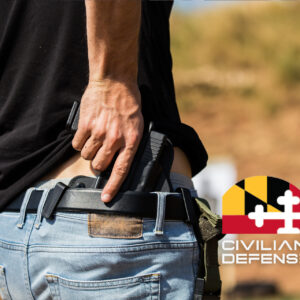
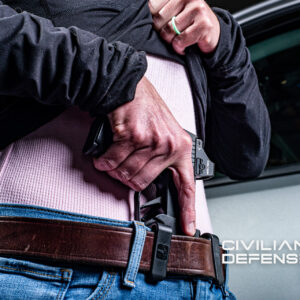
The IWB carry position is extremely popular and effective and this position has advantages for Concealed Carry . Namely, it enhances concealment particularly when your concealed garment may rise up over your holstered firearm or if the garment happens to move behind the holstered firearm. This carry position in essence, reduces visibility of your carry firearm, reduces the probability of printing your firearm through your clothing, and maintains a very secure posture for your firearm with a secure fit against your body. Additional concealment is retained by a significant margin as compared to other carry positions. The composition of the holster is exceedingly important for this type of carry. This carry positions places the holster between the tension of your belt, your body, and your concealed garment. The holster material should not collapse when drawing the firearm which would inhibit an effective draw stroke, nor should it collapse when the firearm is out of the holster inhibiting the efficient re-holstering of the firearm after the draw. Once again, I suggest the kydex material for the following reasons: its stiffness and resistance to collapse when the firearm is drawn; its ability to provide a quick release when the draw stroke is initiated and its ability to retain the firearm without any additional locking mechanisms. The only caution regarding this carry position is that your inner garment closest to your body can become disheveled enough to inhibit you from obtaining the proper purchase of the firearm when initiating the draw and when wearing heavy clothing for adverse conditions, it may require a little more preparation and/or practice to achieve the proper grip when initiating the draw. However, these are minor concerns that can be overcome with practice and preparation. IWB holsters work best with small to medium sizes handguns which can be worn with reasonable comfort. Large frame handguns in an IWB position can become insanely uncomfortable after a short period of time under normal conditions. However, although I have tried the IWB on several occasions, the only real downside that I can identify for me with the IWB carry position is body geometry and I have concluded after several tries, I simply do not have the proper body geometry for this carry position!
The OWB Carry Position
If I had to guess and I am, the OWB is one of the most widely used Concealed Carry positions utilized today and has certainly been around for a number of years. It is a highly effective Concealed Carry position for all the Concealed Carry types and is of particular value if the alternative positions are not feasible. It provides adequate concealment, it provides easy and fast access to your firearm under a majority of conditions for Concealed Carry even if you are wearing heavy clothing for adverse conditions, the firearm is on your strong side and is accessed with just minor preparations of the garments. This carry position offers significantly more comfort for all day EDC and has the advantage of carrying large frame handguns with considerably more comfort than other carry options. The OWB also allows for a more natural draw sequence and is less likely for the potential of sweeping the muzzle toward yourself or someone in close proximity to you such as your wife or child. The other advantage to this carry position is, by blading your body toward the threat, you can, to some degree, covertly draw your firearm without bringing direct attention to yourself from the threat as you initiate the draw sequence. However, this carry position increases the visibility of your carry gear with the potential for printing your firearm or your mag carrier against your concealed clothing. However, as mentioned in early articles, wearing dark clothing can help reduce the impact of printing, as it does with all carry positions, especially during warmer climate conditions. I carry a kydex holster, strong side OWB for normal EDC which is the same holster and gear I used in IDPA competition. IDPA stipulates normal EDC gear and not competition specific type equipment and has rules to enforce this mandate. The combination of handguns and gear I use satisfies both EDC and competition.
The Appendix Carry Position
The appendix carry position has been around since the days of the pirates and swashbucklers who essential tucked their firearm into their belt at the appendix position but in the last 20 years or so, this position has become the rage for Concealed Carry . As with anything, there are pros and cons to every application. The primary benefit realized and attested to by most appendix carriers is you are able to access your firearm quicker than other carry options simply due to the location of the firearm with respect to your dominate hand. Another advantage is appendix carry provides less imprinting than other carry methods and those who carry appendix claim appendix carry is more comfortable especially when seated in your vehicle. I have no reason to question these affirmations but again, these advantages rely on proper body geometry and may not work for everyone. However, nothing is perfect, and appendix carry is no exception. The drawbacks documented from the appendix carry position indicate that inexperienced shooters are more likely to have an Accdiental Discharge (AD) resulting in injury, normally when re-holstering as compared to other concealed carry positions. This translates to an injury to the groin area or femoral artery if they are not trained well and/or when they are engaged in a stressful situation. We have to remember, we are not talking about utilizing a carry position on the range for practice or competition, we are talking about an effective carry position that will enable us to engage a threat from any number of positions, encounters, and circumstances. There are actually ranges who will not allow appendix carry during competitions due to the potential for an AD and possible injury. So, for a practical application standpoint, you have to consider what if I’m pushed to the ground and I’m on my stomach with my body covering my handgun. What if I’m walking down a crowded mall and my wife or child are walking along my dominant side when a threat presents itself. Can I successfully draw, without sweeping myself, my child or a by stander and engage the threat. If I do have to draw in a defensive situation, can I draw my firearm in a defensive situation successfully and avoid the issues just mentioned and engage the target? Can I draw from the appendix position without giving away my intentions that I am trying to access my firearm making me the first target the threat will engage? Certainly, with practice, training, and the proper mindset under stress you can reduce these listed potentials for an accident, but the negatives still remain. The other issue with this carry position that I am not a fan of is you do have to alter your draw sequence slightly as compared to the other Concealed Carry positions. As you may have guessed, I am not a big fan of appendix carry for these reasons which I have only mentioned a few here. Certainly, there are documented advantages to this carry position and if you are contemplating utilizing the appendix carry position, you should conduct further research on all the pros and all the cons of this particular style. Bottom line, if you practice and train to overcome any deficiencies mentioned or ones not mentioned, you can overcome the negatives but realize they still exists, and to some degree, all methods of concealed carry inherently have the potential for an AD or other issue but some have a higher inherent potential that will always exist every time you draw your firearm. Carrying a concealed weapon is a personal choice the same as the method you choose for a concealed carry position not withstanding body geometry. It is ultimately your responsibility to safely determine which method works best for you. That said, remember, you carry concealed to enable yourself to provide effective defensive action in a critically dynamic situation where your life or the lives of others are at risk. In Series 6 we will be discussing the various draw sequences for concealed carry and defensive shooting.
About the author
Lew Soccorsi brings over 32 years of experience as a firearms instructor, sharing his extensive knowledge and insights on firearms training and safety through the Civilian Defense Training Blog. Specializing in NRA Basic Pistol, Concealed Carry, and advanced tactical training, Lew offers expertise across various levels of Tactical Handgun and Carbine instruction. He holds certifications as an NRA Basic Pistol and Range Instructor, a Handgun Instructor through Sig Academy, and numerous tactical certifications, including a Master Gunsmith Certification. Lew’s depth of experience makes him an invaluable asset to our team.
 The Basics Concepts for Concealed Carry: Intermediate Development Skills: StanceApril 21, 2025 - 7:10 am
 The Basics | Concepts for Concealed Carry: Handgun Manipulation ― ReloadsApril 7, 2025 - 6:55 am



Leave a Reply
Want to join the discussion?Feel free to contribute!